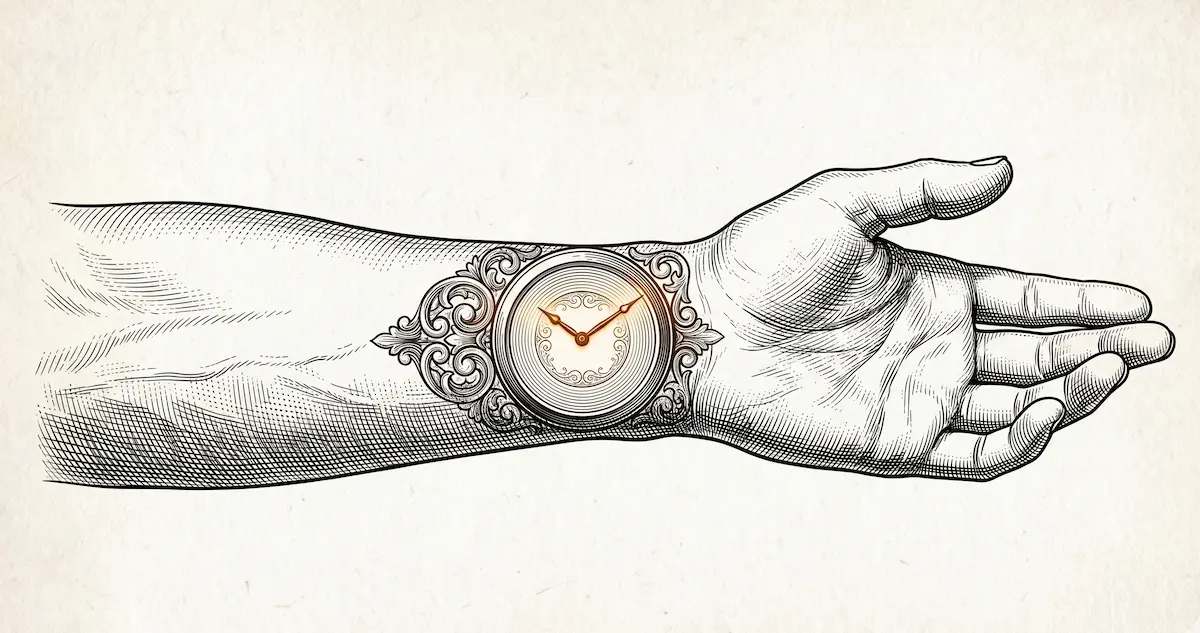
When I was younger, I wanted to tattoo a watch on my forearm.
The idea was to look at it every day and remember. Time is short. Use it well. Don't die with regrets.
Read time: 13 minutes

Published on May 3, 2026
Last Updated on May 20, 2026
The word was never wrong. The problem was what people did with it.
When I’d ask someone what their purpose was, I’d get answers like:
What I meant by purpose was something specific. The contribution you want to make to the world, combined with the skill you want to use to deliver it. Two parts. A direction and a tool.
But the moment I introduced the word “contribution,” half the room shut down. Some people only cared about money. Some couldn’t think about helping others because they themselves still needed help. (Maslow’s hierarchy is real. You don’t think about contribution when you’re worried about rent.) And the ones who did engage often did it out of obligation, because I told them to.
A few thought purpose meant working at a charity or saving the rainforest. The rest assumed it was something so big and important they had no chance of finding it.
So I dropped the word.
TL;DR: I was on my bike one day, listening to an audiobook, when the phrase “life’s work” landed differently.
Life’s work is general enough to do the job. It doesn’t need a glossary. It doesn’t lock you into a specific format (job, business, side project, all of the above). It doesn’t promise grandeur. And it doesn’t pretend the path is short.
Here’s what I think life’s work actually is.

Your soul came here with something to do. Maybe more than one thing. To learn how to love. To work through something you didn’t finish before. To leave a small mark on the world. And, I suspect, to deliver a specific piece of work in this lifetime.
That work doesn’t live in your CV or your skills inventory. It lives in your essence. The light within you that exists underneath the ego, the trauma, the noise.
When you get in touch with that essence, you start to hear it. People call this a *calling* for a reason. You’re not deciding what to do. You’re being called towards it. And when you follow it, you do work that matters.
Not “matters” in the abstract. Matters to *you*, specifically. The environment might need saving, but does that matter to you? Maybe yes. Maybe no. For me, what matters is helping kids develop healthily, helping others live a meaningful life, leaving this life better than I found it, and learning how to love. Four threads, one umbrella. Yours will look different.
Most people who try to find their life’s work assume it has to be enormous.
Curing cancer. Solving climate change. Writing the great novel. Something that, written down, sounds like a film pitch.
So they don’t start. They assume they’re not qualified, not smart enough, not far enough along. They wait for the magical moment when they’ll be ready, and the moment never comes.
This is rubbish.
You can start your life’s work today, with the skills you currently have. You may not deliver it fully yet. You may need five or ten years of building, paid jobs, side roles, courses, mentors, mistakes. That’s fine. The point isn’t to wait until you’ve reached the top of the mountain to decide what direction you’re climbing. The point is to know the direction now, and start.

I’ll be honest. I worry about money.
I have a one-year-old. My working hours are roughly half what they used to be. The remaining five or six hours a day go to building this business and keeping the lights on. There are days I get wrapped up in the fear of not earning enough. There are days I argue with my wife instead of doing my work. There are days the fear wins.
On the better days, I notice something else. When I’m focused on giving, on contributing, on following what I’m here to do, the fear goes quiet. I think: I could drive an Uber on the side if it meant I had time for the real work. I could do anything. The life’s work is important enough that the rest is just logistics.
I’m not perfect at this. Most days I’m closer to 10-20% aligned with my life’s work than 100%. But I notice the difference.
I say this because the money fear is real. It’s not an excuse. But it’s also not a reason to give up before you’ve started.
I think about my parents.
I love them. They did their best with what they had. But I don’t think they ever found their life’s work. They were stuck in the survival trap that most people are stuck in, and I suspect they don’t even know what they missed.
Some days I judge them for that. Some days I see what they did, small as it was, as the most meaningful thing they could have managed. Both are probably true.
What I do know is what it looks like when someone hasn’t found their life’s work and hits their fifties. The questions start coming.
What legacy am I leaving? At the most basic level, did I leave a house, a piece of land, something for the kids? Higher up the hierarchy, did I contribute anything? Did I leave the world a little better than I found it? Is there a body of work behind me, or just a CV?
These questions arrive whether you want them or not. You can either have answers, or you can have regrets.
Yes. But it’s harder for some.
The thing standing between you and your life’s work is usually your ego. The harder the shell, the harder it is to hear your essence underneath. Alan Watts had a line about people in the East having an easier time with this because their egos are less inflated. In the West we have thicker shells. We have to work harder to crack them open. Suffering helps. Therapy helps. Quiet helps.
If you grew up in a household where someone else made all your decisions (what to wear, what to study, what job to take, who to marry), this is even harder. You never built the muscle of choosing for yourself. So when life’s work asks you to choose, you freeze.
You can still do this. It just takes longer. And more patience with yourself.


Silviu Cojocaru is a career and purpose coach, and the founder of The Aha! Moment Academy. Based in London, he works with mid-career professionals who feel they’ve outgrown their current work but haven’t yet named what comes next. His coaching method is essence-based, drawing on the Implicit Career Search tradition: starting with who you are underneath the role, before deciding what to do about it. He coaches, facilitates small groups, and writes weekly on calling, contribution, and the quiet work of becoming yourself at theahamoment.academy/blog.
I write about that quiet voice telling you when something’s off track. The career fog, the transitions, and the terrifying bit where you start telling the truth. And how to align your work with your Self. Subscribe and I’ll keep going.
I write about that quiet voice telling you when something’s off track, plus: the career fog, the transitions, and the terrifying bit where you start telling the truth. And how to align your work with your Self.
New posts every week when they’re “cooked”.

The Aha! Moment Academy
Typically replies within minutes
Welcome to The Aha! Moment Academy.
Please share your Query.
Send on WhatsApp
Online | Privacy policy
WhatsApp us

Your thoughts?
I read every single one (yes, really). No wrong answers (except 'great post').
Comments
No comments yet.